


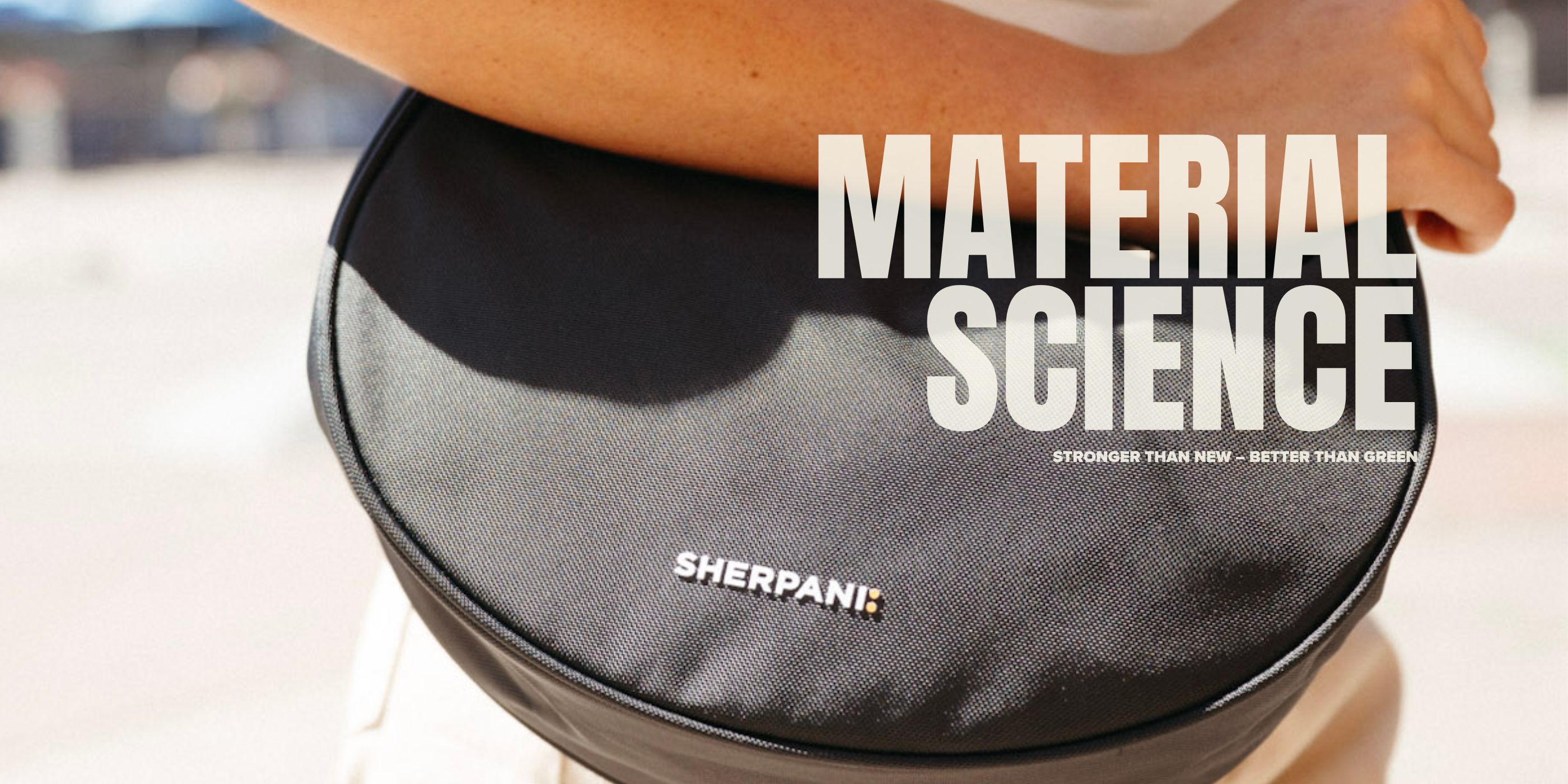

MATERIAL SCIENCE.
Stronger Than New. Better Than Green.
We didn’t set out to make a "sustainable" bag. We set out to make an indestructible one. The goal was simple: engineer a fabric that performs harder and lasts longer than traditional textiles. The fact that it happens to clean up the planet is just a happy side effect.


FEATURED READ
Sustainable materials aren't a compromise—they're simply the higher-quality choice.

rPET: Why Recycled Water Bottle Bags Are Better
Recycled Water Bottle Bags: Good Bones Start With Good Material Most bags are built from low-cost material from unknown sources. Our recycled water bottle bags start with something already engineered...
SHOP THE COLLECTION
Stronger Material. Smarter Construction. Built to Last.
Recycled rPET, high-tension hardware, reinforced seams — every Sherpani bag is built to outlast the trip. Durability first. Sustainability follows.


Built to Last: The Details.
Recycled materials, responsible sourcing, and durable construction — the sustainable travel questions everyone asks, answered in one place.
Are recycled water bottle bags as strong as bags made from virgin materials?
Recycled rPET starts as an already-engineered, food-grade polymer — meaning it's often more abrasion-resistant and colorfast than unvetted virgin plastic.
What's the difference between a "sustainable" bag and a quality bag?
A quality bag is built to outlast the trip. If it's built well, it naturally becomes the more sustainable choice too — durability and sustainability aren't separate goals here.
Are recycled fabrics stronger than regular fabrics?
In many cases, yes. Recycled fabrics like recycled nylon and polyester go through rigorous testing — including extreme heat and cold exposure — to meet or exceed the durability standards of virgin materials, often resulting in improved strength and weather resistance.
What is rPET, and why does Sherpani use it?
rPET is recycled polyethylene terephthalate, sourced from water bottles. It's a high-tenacity polymer already engineered to resist punctures and extreme temperatures — a stronger starting point than most raw materials.
Does sustainable construction mean sacrificing performance?
No — it's the opposite. Sustainable materials are chosen because they perform better, not despite it. Performance comes first; sustainability is the result.
